
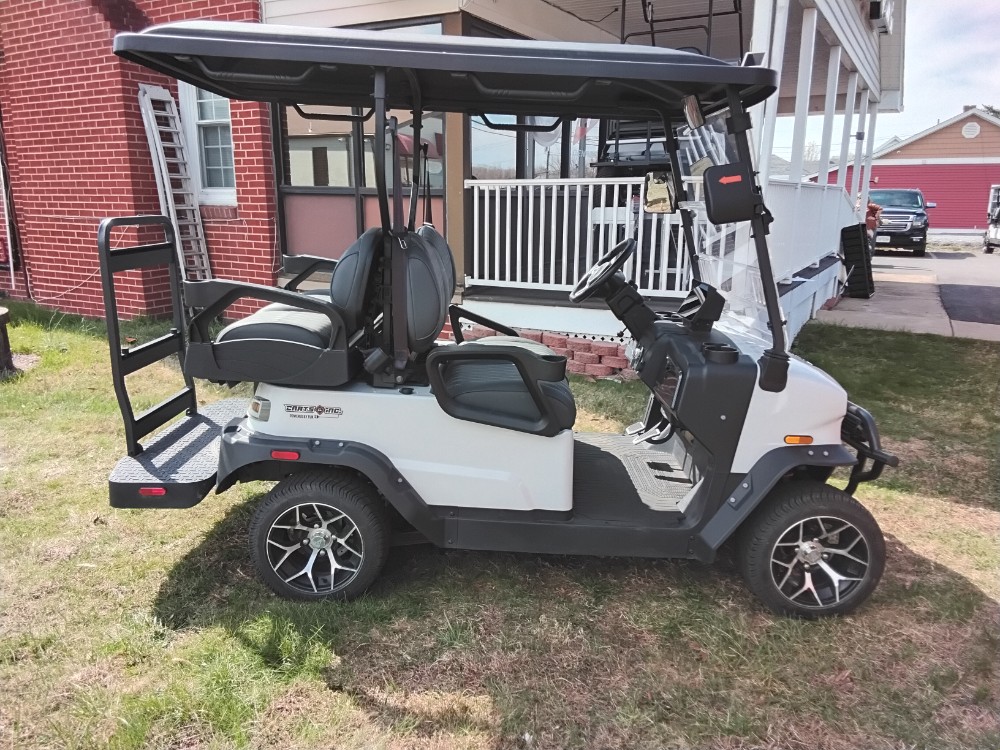
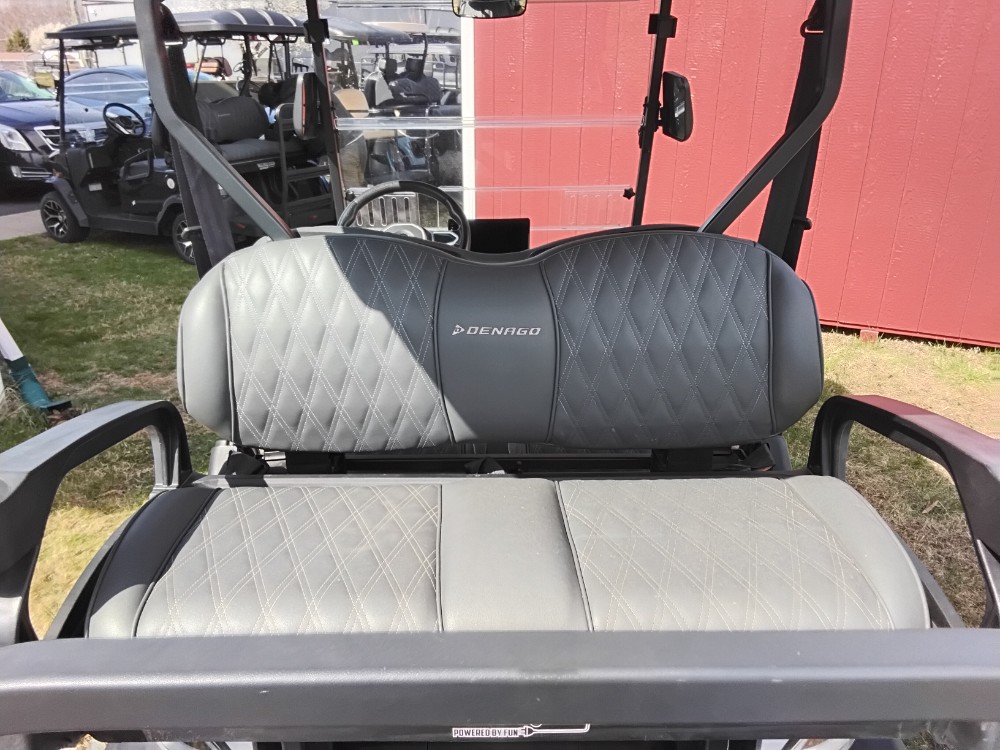
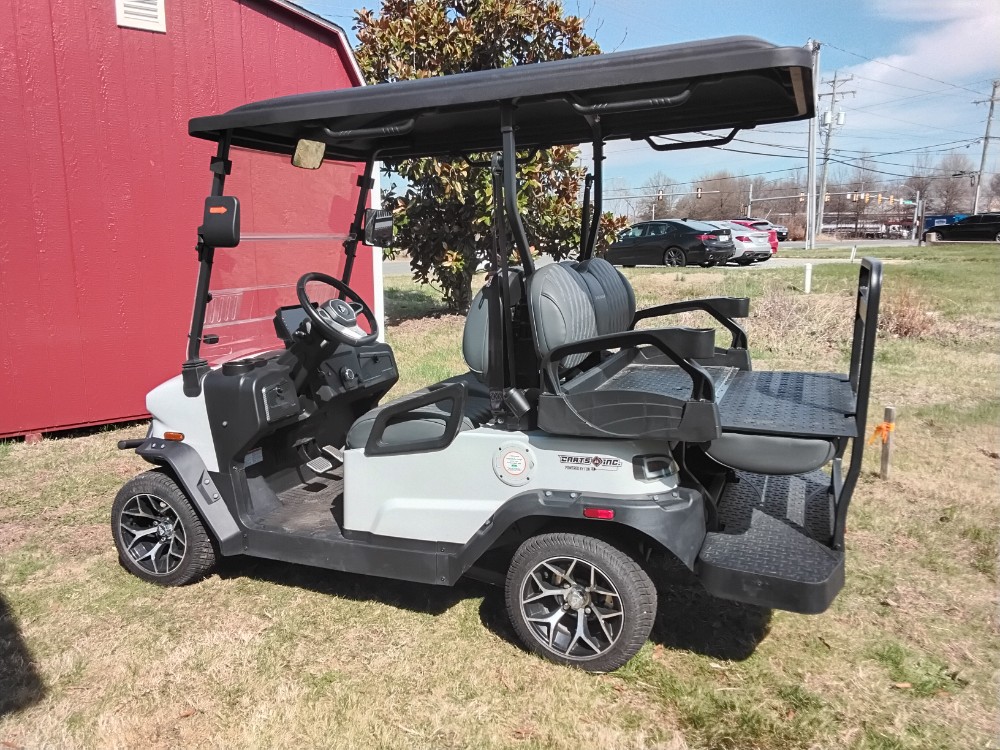
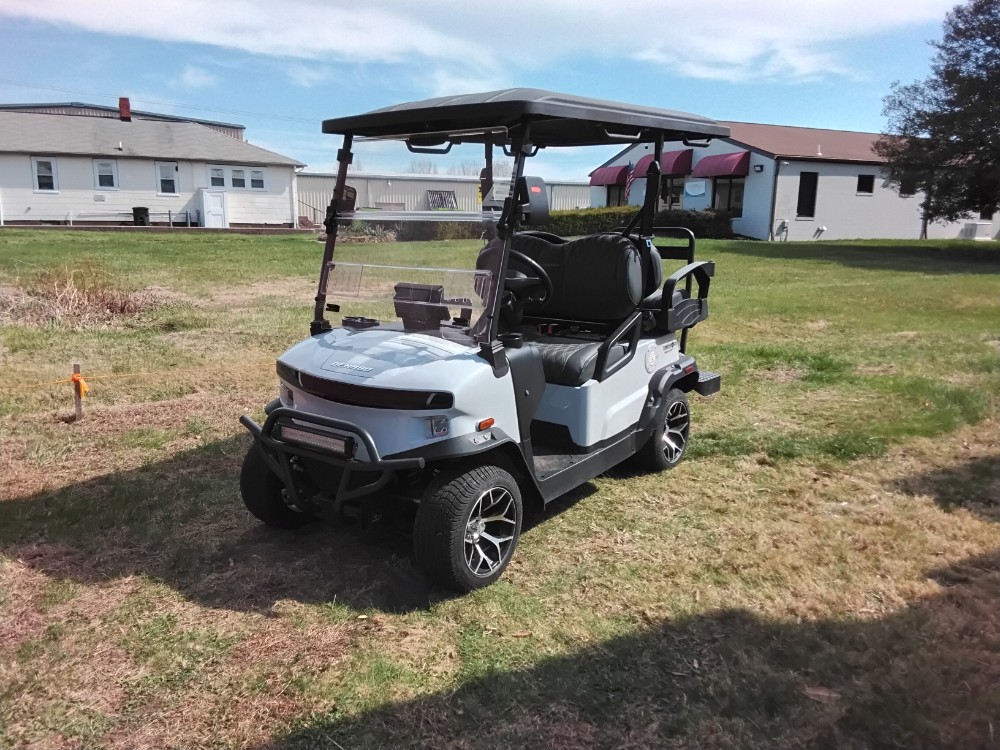
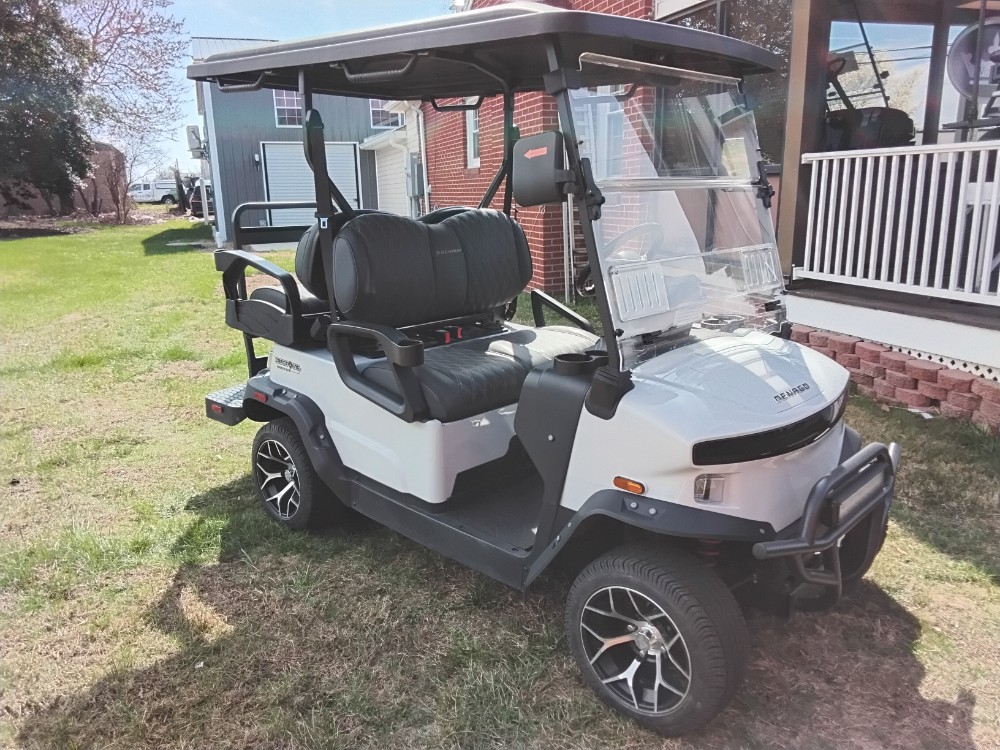
Product Overview
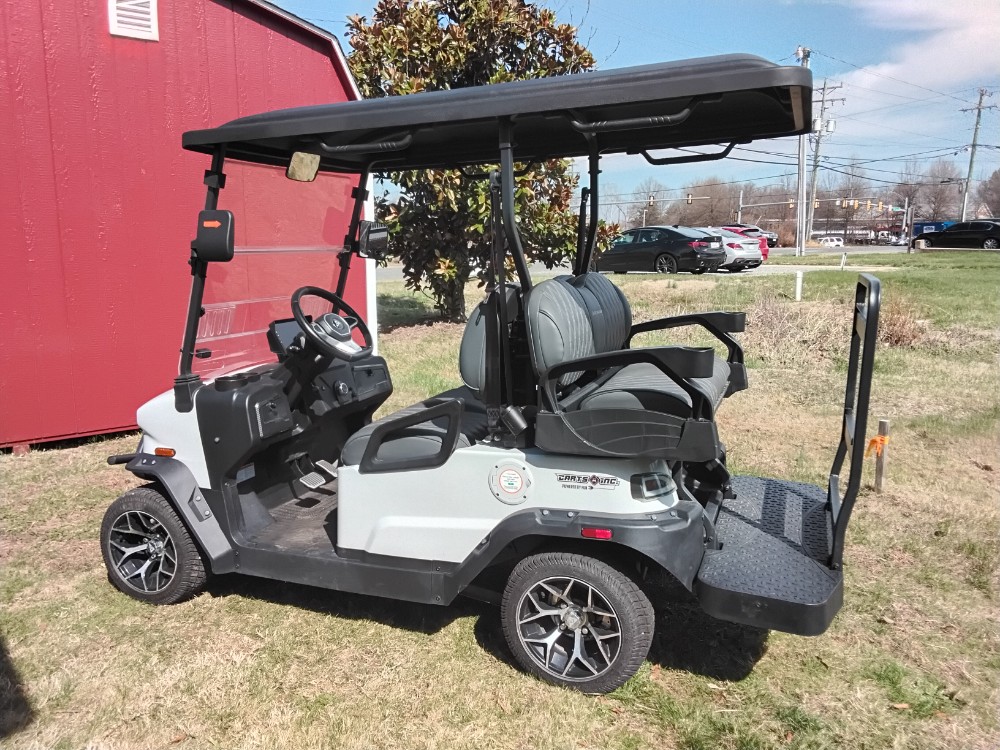
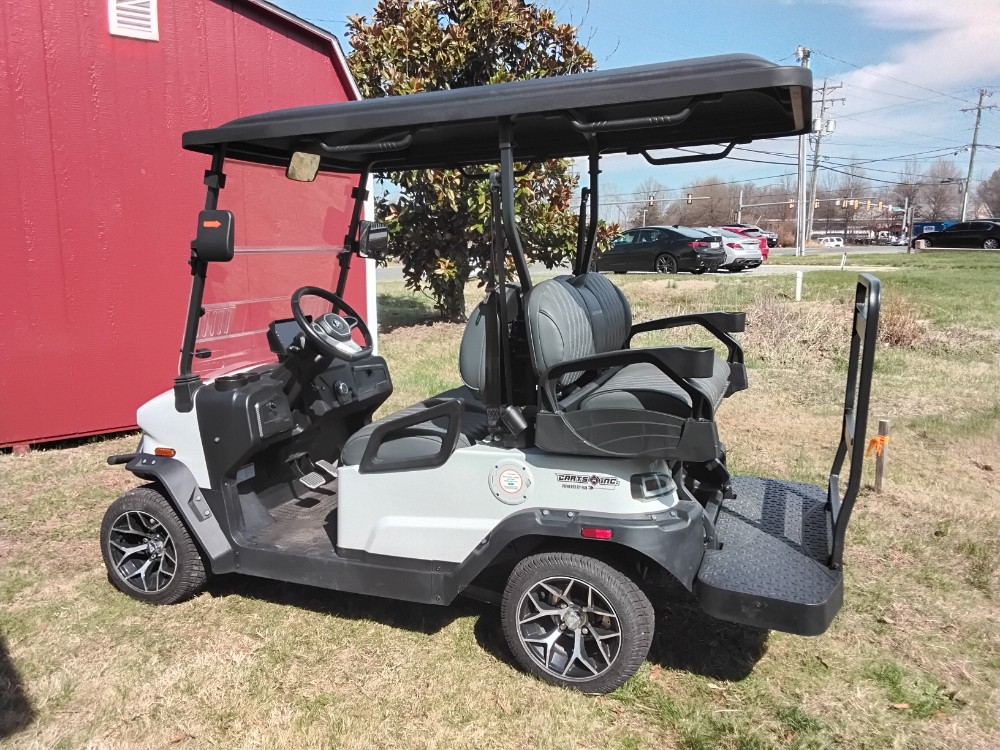
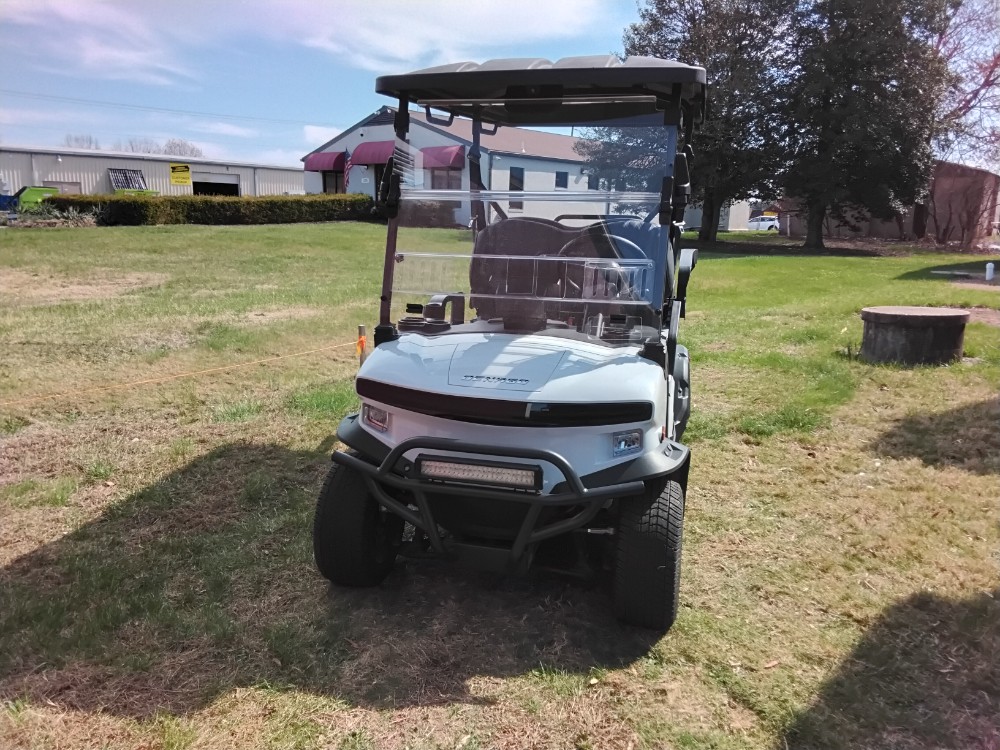
Experience practical, modern electric transportation with the 2025 Denago EV Nomad, a four-passenger electric golf cart designed for convenient short-distance travel, everyday mobility, and recreational use in appropriate environments. Combining a contemporary design, electric powertrain, lithium battery technology, and seating for up to four occupants, the Denago Nomad offers a versatile transportation option for private properties, residential communities, resorts, campuses, and other suitable locations.
This vehicle is listed as a used 2025 Denago Nomad with electric lithium power and four-passenger seating. Its electric drivetrain provides quiet operation without gasoline, while the four-seat configuration makes it practical for transporting family members, guests, or coworkers over suitable short distances.
The Denago Nomad’s published features include an AC electric motor, lithium iron phosphate battery technology, an onboard charging system, a digital driver display, LED lighting, and convenient passenger features. Depending on the equipment installed on this particular vehicle, additional features may include a rearview camera, USB charging ports, a sound system, cup holders, a rear flip seat, mirrors, seat belts, and a front light bar.
As a pre-owned vehicle, its exact mechanical condition, battery health, cosmetic appearance, mileage, charging performance, and included accessories should be evaluated individually. The specifications below describe published Nomad configurations and should be confirmed against the actual cart before purchase.
Product Details
- Model year: 2025
- Make: Denago EV
- Model: Nomad
- Vehicle type: Electric golf cart
- Power type: Electric, lithium battery
- Seating capacity: 4 passengers
- Condition: Used / pre-owned
- Motor type: AC electric motor, subject to configuration verification
- Published battery type: Lithium iron phosphate (LiFePO₄)
- Published battery specification: 51.2 V, 105 Ah, subject to verification
- Published range: Approximately 40 miles per charge under suitable conditions
- Published maximum speed: Up to approximately 25 mph, depending on configuration
- Color: Confirm with the seller
- Mileage or operating hours: Confirm with the seller
- Charger included: Confirm with the seller
- Accessories included: Confirm against the actual vehicle
Key Features and Benefits
1. Four-passenger seating for shared transportation
The Denago Nomad is designed to accommodate four occupants. Its passenger configuration makes it suitable for short trips where a driver and several passengers need to travel together.
Four-passenger seating can be useful for residential communities, private estates, resorts, recreational properties, and other locations where golf-cart-style vehicles are permitted. The seating layout also makes the Nomad a practical option for buyers seeking a compact alternative to using separate vehicles for short-distance transportation.
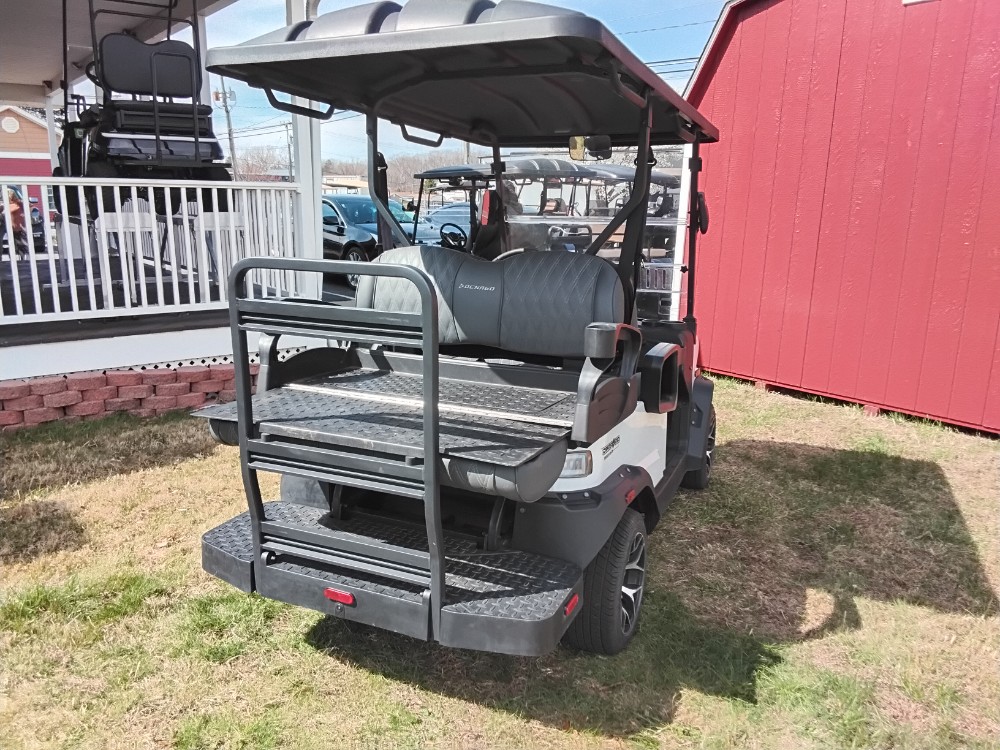
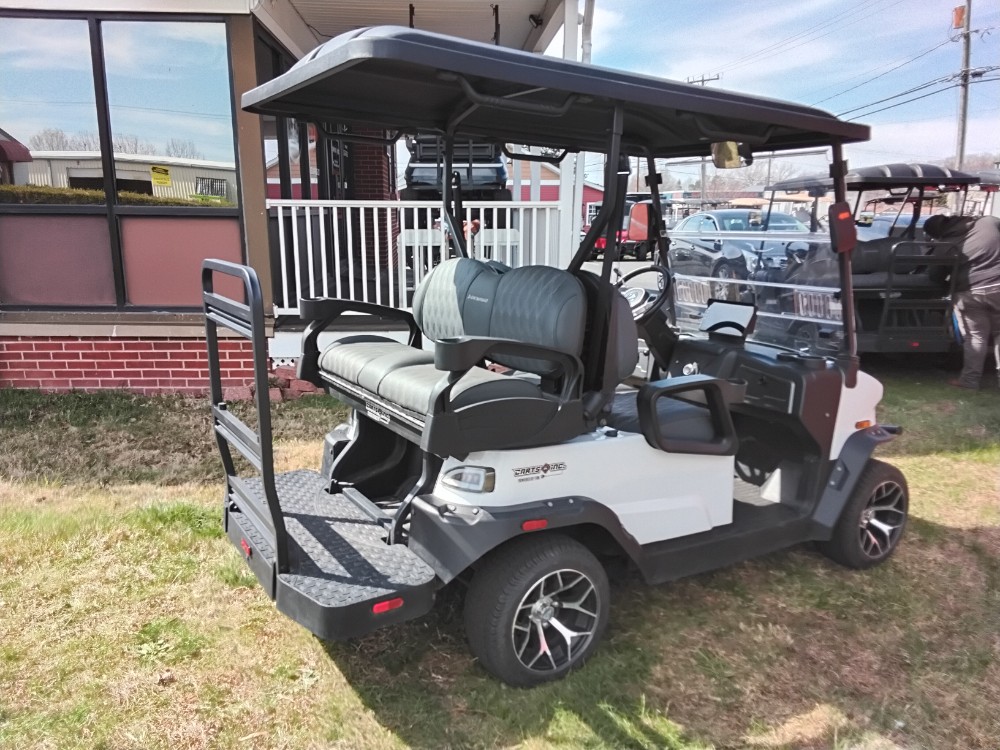
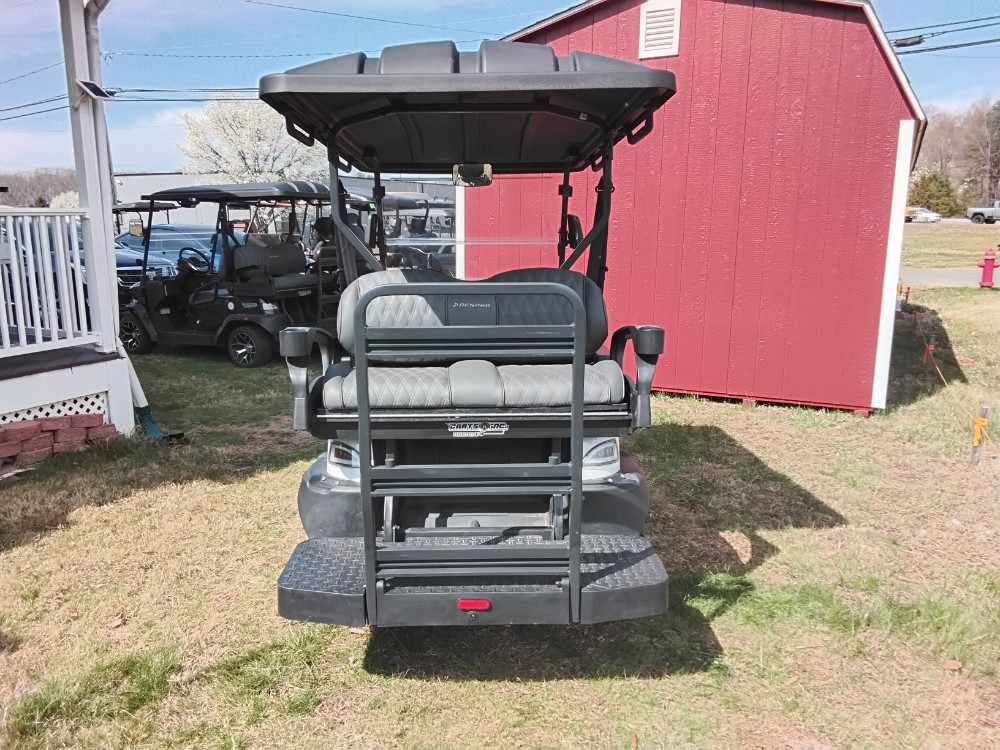
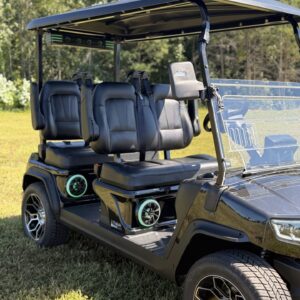
Some configurations include a rear flip seat that can provide additional flexibility when carrying light items. The precise rear-seat design and any cargo function should be checked on the actual vehicle.
Always follow the manufacturer’s approved passenger capacity and maximum load rating. Passengers should remain seated in designated positions and use installed restraints as directed.
2. Electric power with quiet operation
The Denago Nomad uses an electric powertrain rather than a conventional gasoline engine. Electric operation can be especially convenient for short trips around suitable residential and commercial properties where lower operating noise is desirable.
Electric propulsion eliminates the need for gasoline and conventional engine oil changes, spark plugs, and engine tune-ups. However, an electric golf cart still requires regular maintenance of its battery, charger, tires, brakes, steering, suspension, lights, and electrical systems.
For a used vehicle, buyers should verify that the motor starts and operates correctly, acceleration is smooth, and there are no unusual noises, warning indicators, or known electrical problems.
3. Lithium iron phosphate battery technology
Published specifications for the Denago Nomad identify a lithium iron phosphate battery, commonly abbreviated as LiFePO₄. This rechargeable battery chemistry is used in electric vehicles because of its useful cycle life, energy-storage performance, and relatively low routine maintenance requirements compared with many traditional lead-acid battery systems.
The published Nomad configuration includes a 51.2 V, 105 Ah battery. This corresponds to approximately 5.38 kWh of nominal energy based on the stated voltage and amp-hour capacity. The installed battery may differ by configuration or production revision, so the battery label should be checked before purchase.
Battery condition is particularly important when purchasing a used electric vehicle. Battery age, charging history, storage conditions, temperature, and previous use can affect remaining capacity and driving range.
Before buying, ask the seller to confirm:
- The battery’s installed chemistry, voltage, and amp-hour rating.
- The battery’s age and any replacement history.
- Whether the battery charges fully and holds its charge normally.
- Whether the battery management system displays any warnings or faults.
- Whether the original compatible charger is included.
- Whether the charging port and charger have been tested.
- Whether any battery service records are available.
A lithium battery should be charged and maintained according to the manufacturer’s instructions. Do not use an unapproved charger or continue using charging equipment that shows signs of damage or overheating.
4. AC electric motor
Published specifications identify an AC electric motor for the Denago Nomad. The Nomad is commonly listed with a 5 kW AC motor, although specifications and components can vary by production version and market.
An AC electric motor provides power for normal golf-cart-style operation, including acceleration, maneuvering, and suitable short-distance travel. Actual performance depends on battery health, controller configuration, passenger load, terrain, tire condition, and maintenance.
The seller should verify the motor rating and disclose any known performance problems or repairs. Buyers should also check that the vehicle accelerates and decelerates smoothly and that the drive selector, accelerator, and braking system work properly.
5. Onboard charging convenience
Published Nomad specifications identify an onboard lithium charging system. An onboard charger can simplify the charging process by reducing the need to handle a separate external charging unit.
Charging time depends on the battery’s starting charge level, charger rating, battery temperature, and battery health. Model specifications commonly indicate around five hours for a full charge under suitable conditions, but this should not be treated as a guarantee for a used vehicle.
Before purchase, confirm that the charger is present, compatible, and working. Inspect the charging port and cable for wear, damage, or loose connections. Use the charging setup and electrical supply recommended by the manufacturer.
6. Modern driver information and dashboard
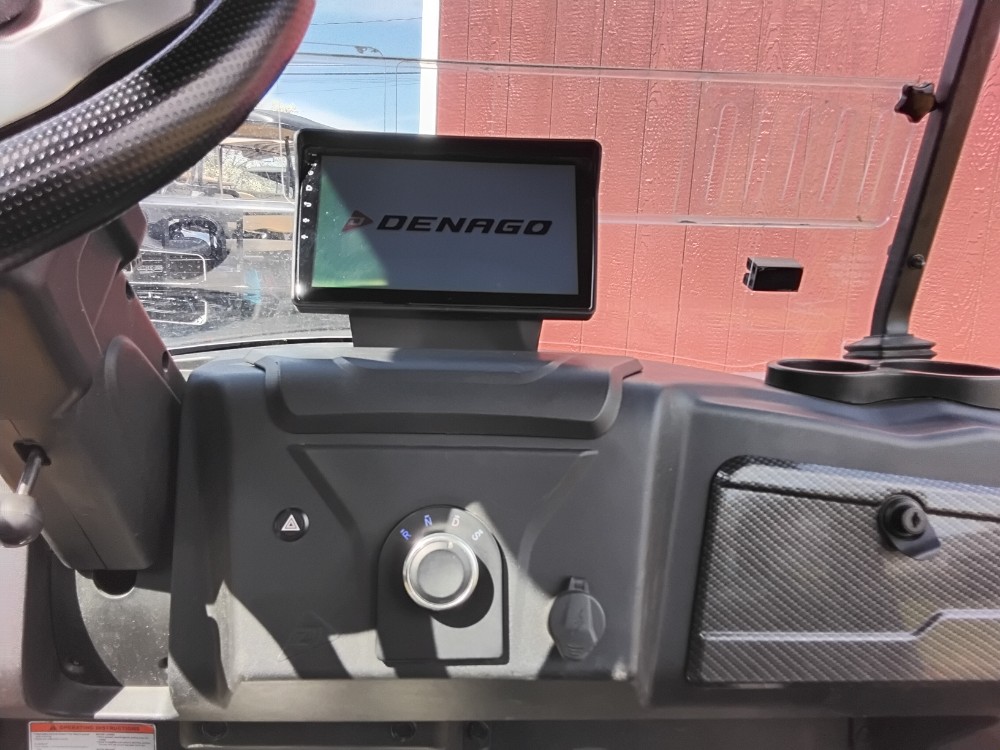
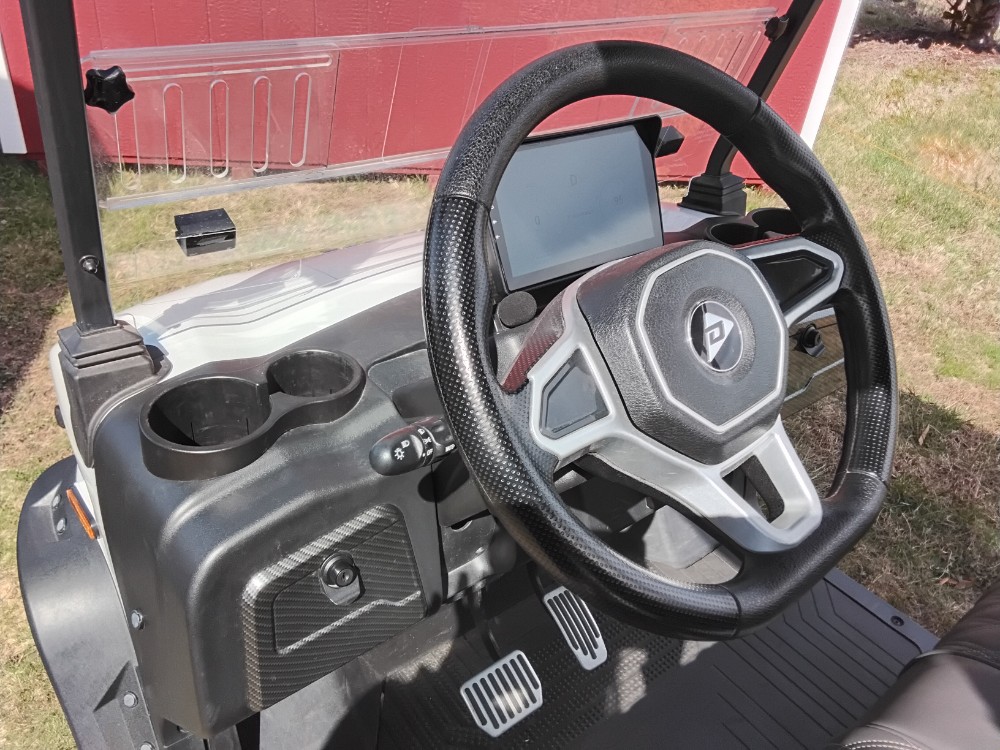
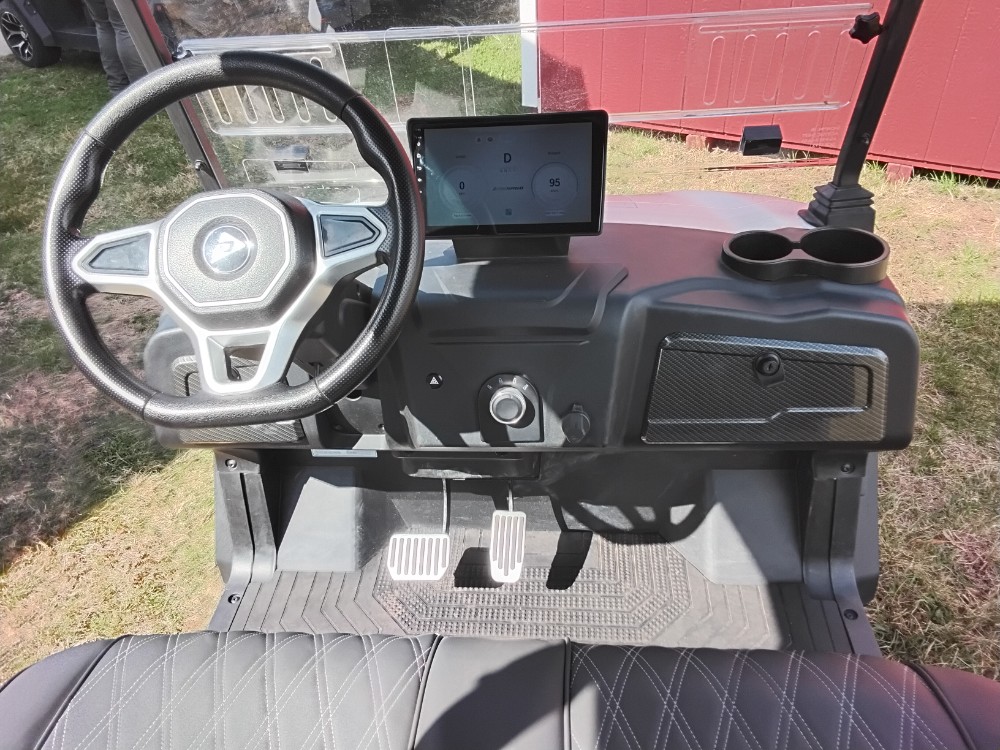
Depending on the installed configuration, the Denago Nomad may feature a driver display with information such as speed, odometer readings, and battery charge status. These details can help the driver monitor the vehicle during normal operation.
Some listings describe a larger display with additional media or connectivity functions. The display size, available applications, phone compatibility, and installed software can vary, so confirm the exact equipment on the used cart.
Check the display for cracks, missing pixels, warning messages, and incorrect or nonfunctional readings before purchase.
7. Lighting and visibility
Published Nomad equipment includes LED lighting and other visibility-related features. Depending on configuration, the vehicle may include LED headlights, taillights, brake lights, turn signals, hazard lights, side mirrors, a rearview mirror, and a front LED light bar.
These features can help the driver see and be seen in appropriate operating conditions. Their presence and functionality should be checked on the actual vehicle.
If the vehicle will be used on public roads, do not assume that the standard equipment is sufficient for legal road use in every location. Registration, road certification, lighting, mirrors, reflectors, insurance, and other requirements vary by jurisdiction.
8. Rearview camera and reversing assistance
A rearview camera is listed among published Denago Nomad equipment. If installed and functioning, it can help the driver observe the area behind the vehicle while reversing.
The camera is an assistance feature, not a substitute for checking the surrounding area. Before reversing, look for pedestrians, children, animals, obstacles, and other vehicles. Verify that the camera image and display operate correctly on this used vehicle.
9. Comfortable passenger layout
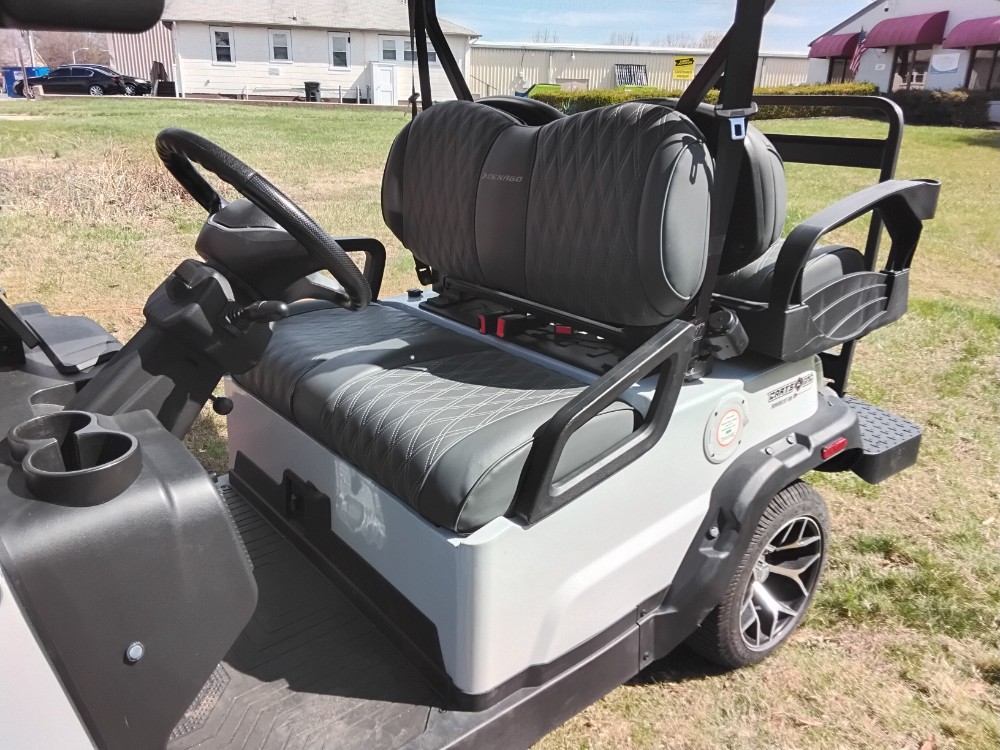
The Nomad’s four-passenger layout is designed to provide shared transportation in a compact vehicle format. Depending on the installed configuration, features may include supportive seats, a roof canopy, cup holders, a rear flip seat, seat belts, and convenient storage areas.
Inspect the seats and upholstery for tears, stains, fading, cracking, or loose fittings. Check that the roof and supports are secure and that any installed seat belts latch and release properly.
Do not assume that a specific seat material, roof configuration, windshield, or storage compartment is included unless it is visible in the vehicle photographs or confirmed by the seller.
10. Practical exterior design
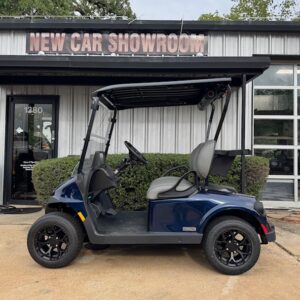
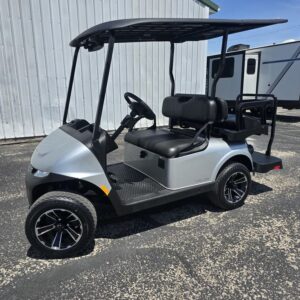
The Denago Nomad has a modern golf-cart-style design intended for everyday mobility and recreational use. Depending on the specific configuration, its exterior may include molded body panels, protective trim, mirrors, wheels, and lighting equipment.
As with any used vehicle, the actual appearance may differ from promotional images. Buyers should review photographs of the specific cart and ask about any dents, scratches, faded surfaces, repaired panels, or modifications.
The condition of the frame, suspension, wheels, tires, and underbody is especially important because these components affect the vehicle’s safe operation.
Technical Specifications
The following specifications are based on published Denago Nomad information and common listings for the model. They are reference specifications, not a certified inspection report for this particular used cart.
| Specification | Published / Listing Details |
|---|---|
| Model year | 2025 |
| Manufacturer | Denago EV |
| Model | Nomad |
| Condition | Used / pre-owned |
| Vehicle type | Electric golf cart |
| Power source | Electric |
| Battery chemistry | LiFePO₄ lithium, verify installed battery |
| Published battery voltage | 51.2 V |
| Published battery capacity | 105 Ah |
| Calculated nominal battery energy | Approximately 5.38 kWh |
| Motor type | AC electric motor |
| Published motor rating | Commonly listed as 5 kW |
| Controller | Denago controller; amperage varies by configuration and listing |
| Published range | Approximately 40 miles per charge |
| Published maximum speed | Up to approximately 25 mph |
| Published charging time | Approximately 5 hours under suitable conditions |
| Charging system | Onboard lithium charger listed |
| Passenger capacity | 4 passengers |
| Seating layout | Four-passenger configuration; confirm actual arrangement |
| Braking system | Verify installed system; published listings vary by configuration |
| Lighting | LED lighting listed |
| Rearview camera | Listed on published configurations; verify installation |
| Dashboard | Driver display listed; verify exact version |
| USB ports | Listed on certain configurations |
| Sound system | Listed on certain configurations |
| Cup holders | Listed on certain configurations |
| Rear flip seat | Listed on certain configurations |
| Exterior color | Confirm with seller |
| Seat color | Confirm with seller |
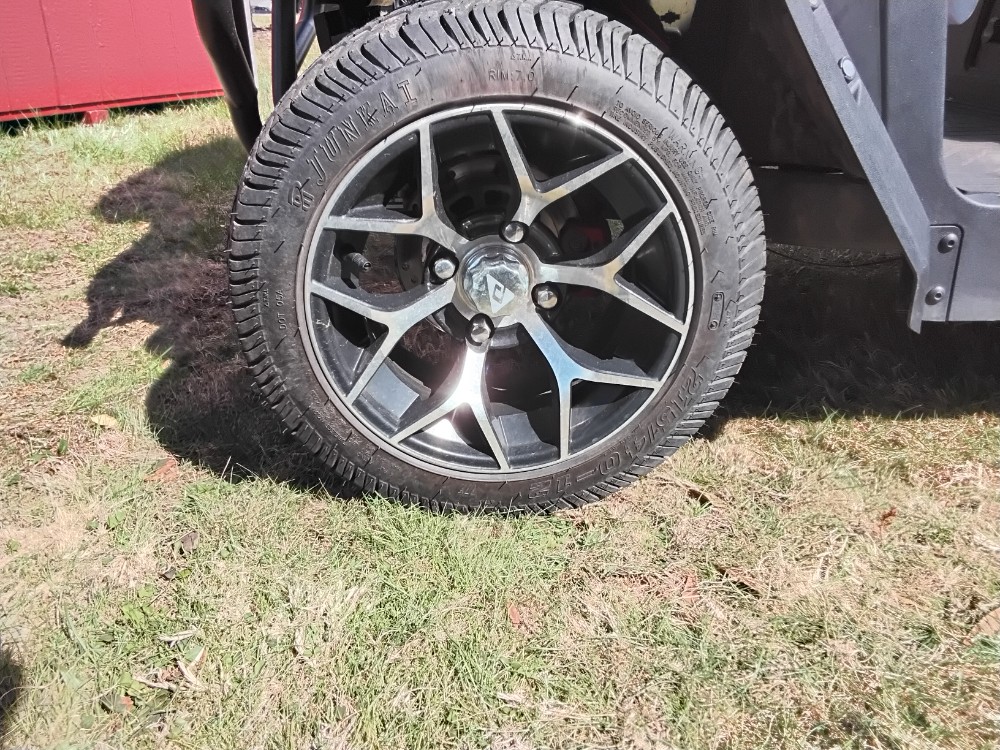
| Wheel and tire size | Confirm actual installed equipment |
| Vehicle dimensions | Confirm by exact configuration |
| Vehicle weight | Confirm by exact configuration |
| Maximum load capacity | Confirm manufacturer’s rating for this vehicle |
| Mileage / operating hours | Confirm with seller |
| Charger included | Confirm with seller |
| Keys / remotes included | Confirm with seller |
| Service history | Confirm availability |
| Warranty | Confirm any remaining or transferable coverage |
Specification disclaimer: Denago may revise components and features between configurations or production runs. Confirm the battery label, motor rating, controller, charger, braking equipment, wheels, tires, dimensions, maximum load, and installed accessories against the actual vehicle and its documentation before publishing exact claims.
Driving Range and Battery Performance
The published Nomad range is approximately 40 miles per charge under suitable conditions. This is a model-level reference figure, not a guarantee that this used vehicle will achieve that distance.
Actual driving range depends on several factors:
- Battery age and remaining usable capacity.
- Number and weight of passengers.
- Cargo weight.
- Terrain, hills, and repeated stops.
- Driving speed and acceleration.
- Tire pressure and tire condition.
- Ambient temperature and battery temperature.
- Use of lighting, displays, audio equipment, and other accessories.
- Charging history and overall vehicle maintenance.
For buyers who need the cart for a specific daily route, it is advisable to ask for a battery health assessment or a practical range test. Do not rely exclusively on the original published range when evaluating a used vehicle.
Charging and Battery Care
Proper charging helps maintain battery performance and supports reliable daily use.
Recommended precautions include:
- Use the correct charger for the installed battery.
- Follow the manufacturer’s charging and storage instructions.
- Inspect the charger, cable, and charging port for damage.
- Keep connectors clean and secure.
- Avoid using damaged cables or equipment that overheats.
- Store and charge the vehicle under conditions recommended by the manufacturer.
- Arrange professional diagnosis if the battery shows warnings, fails to charge normally, or loses range unexpectedly.
The estimated charging time of approximately five hours is a reference value. A depleted, aged, cold, or otherwise degraded battery may charge differently. Ask the seller to demonstrate the charging process and confirm that the included charger works properly.
Intended Uses
The Denago Nomad may be suitable for a variety of short-distance transportation needs, provided the vehicle’s condition and the local rules allow the intended use.
Potential applications include:
- Transportation around private residential properties.
- Short trips within suitable planned communities.
- Guest transportation at resorts and hospitality facilities.
- Mobility around permitted campuses and recreational properties.
- Transportation between buildings on private land.
- Golf-cart use where the vehicle’s design and equipment are appropriate.
- Short-distance travel within facilities that allow electric carts.
The vehicle should be used only in environments suitable for its design. Do not assume that it can be used on every public road, highway, steep trail, or rough off-road surface.
Safety and Responsible Operation
A used electric golf cart should be inspected before regular operation, especially if its service history is incomplete.
Before driving:
- Check the tires for visible damage and proper inflation.
- Confirm that the brakes respond normally.
- Check steering for unusual play or resistance.
- Verify that the lights, turn signals, mirrors, and hazard lights operate.
- Check the dashboard for warning indicators.
- Confirm that the battery and charging connectors are secure.
- Ensure that passengers sit in designated positions and use installed restraints.
- Confirm that the vehicle’s load and operating conditions are within manufacturer limits.
Drive at a speed appropriate for the surface, visibility, passenger load, and surroundings. Avoid steep slopes, deep water, unsafe terrain, and conditions beyond the vehicle’s intended capabilities.
A rearview camera and mirrors do not eliminate blind spots. Drivers must remain alert for pedestrians, cyclists, children, animals, and other vehicles.
Used Vehicle Condition and Inspection
This listing is for a used 2025 Denago EV Nomad. The exact condition of this individual cart must be described according to its current state rather than assumed from the model’s original specifications.
Before publishing the listing, the seller should verify and disclose the following:
Exterior condition
Describe any scratches, dents, paint or body-panel damage, fading, missing trim, cracked lights, or previous repairs. Use recent photographs of the actual vehicle.
Seating and passenger area
Inspect seats, upholstery, seat frames, seat belts, grab handles, roof supports, and any rear-seat mechanism. Disclose visible wear or defects.
Battery and charging
Confirm the installed battery type and rating, battery age if known, charging performance, and whether any warnings or faults are present. State whether a compatible charger is included.
Motor and controller
Check the motor and controller for proper operation, abnormal noise, intermittent power, warning indicators, and known repair needs.
Brakes and steering
Inspect the braking system, steering components, suspension, wheel fasteners, and related safety equipment. Disclose known issues.
Tires and wheels
Describe tire tread, cracking, uneven wear, wheel damage, and any modifications. Confirm the actual tire size if it is relevant to the listing.
Dashboard and accessories
Test the dashboard, odometer, charge indicator, lights, turn signals, camera, USB ports, sound system, and other installed equipment. List only accessories actually included.
Mileage and service history
Provide the odometer reading or operating hours if available. If the reading cannot be verified or is unavailable, say so rather than estimating it. Identify any service records or known repair history.
Ownership and documentation
Confirm which keys, manuals, ownership documents, and other paperwork are included. Disclose known accident history, structural repairs, or modifications where applicable.
Avoid describing the cart as “like new,” “fully refurbished,” “accident-free,” “certified,” or “perfect” unless those statements are accurate and substantiated.
Maintenance Considerations
Electric golf carts do not require conventional gasoline-engine servicing, but they still need regular maintenance.
Recommended maintenance includes:
- Checking tire pressure and wear.
- Inspecting brakes and steering.
- Checking suspension components and wheel fasteners.
- Keeping battery and charging connections clean and secure according to the manual.
- Inspecting cables and connectors for wear or damage.
- Testing lights, mirrors, turn signals, seat belts, and dashboard functions.
- Cleaning the exterior with products suitable for the vehicle’s materials.
- Avoiding water intrusion into electrical components.
- Storing and charging the vehicle according to manufacturer guidance.
- Arranging service if unusual noises, reduced range, warning messages, or charging faults occur.
Follow the applicable Denago owner’s manual for maintenance intervals and approved procedures. A professional inspection can be particularly useful when buying a used vehicle with limited service records.
What Is Included With the Purchase?
The advertised product is a used 2025 Denago EV Nomad electric golf cart with four-passenger seating and lithium power as stated in the listing.
The following items should be included in the listing only if the seller confirms they are supplied:
- Compatible battery charger.
- Keys, remotes, or electronic access devices.
- Owner’s manual and available documentation.
- Windshield, if fitted.
- Roof or canopy, if fitted.
- Rearview camera and display equipment, if fitted.
- USB charging ports and sound equipment, if fitted.
- Any removable accessories or aftermarket additions.
- Available maintenance or repair records.
Equipment can vary between individual vehicles. The actual cart, recent photographs, and written purchase terms should determine what is included.
Warranty, Delivery, and Purchase Considerations
Warranty coverage for a used vehicle must be verified. Do not assume that the original manufacturer’s warranty remains active or transfers to a subsequent owner. Coverage can depend on the original purchase date, registration, service history, warranty terms, and other conditions.
Before completing the purchase, confirm:
- The advertised price and any additional charges.
- Applicable taxes and delivery or collection fees.
- Whether a physical inspection or test drive is available.
- Whether the charger and keys are included.
- The seller’s return, cancellation, and deposit policies.
- Available payment methods and financing terms.
- Ownership and registration documents.
- Any remaining transferable warranty, confirmed in writing.
- Local requirements for registration, insurance, and road use.
For a remote purchase, request clear, recent photographs of the actual cart. Useful photographs include the front, rear, both sides, seating, dashboard, battery label, charger, tires, and any visible damage.
Frequently Asked Questions
Is the 2025 Denago Nomad new or used?
This listing is for a used 2025 Denago Nomad. Its actual cosmetic condition, mileage, service history, and battery health should be confirmed with the seller.
How many passengers can it carry?
The listed seating capacity is four passengers. Follow the manufacturer’s approved seating arrangement and maximum load rating.
Is this a gasoline or electric vehicle?
It is listed as an electric vehicle powered by a lithium battery system. It does not use a conventional gasoline engine.
What battery does the Denago Nomad use?
Published specifications identify a LiFePO₄ lithium battery, commonly listed as 51.2 V and 105 Ah. Verify the installed battery label because specifications can vary.
How far can it travel on one charge?
Published Nomad specifications indicate approximately 40 miles per charge under suitable conditions. The actual range of a used cart depends on battery health, passenger and cargo weight, terrain, temperature, speed, and accessory use.
How long does charging take?
Published specifications commonly indicate approximately five hours under suitable conditions. Actual charging time varies with the charger, battery state of charge, and battery condition.
What is the maximum speed?
Published specifications indicate a maximum speed of up to approximately 25 mph for certain configurations. The actual speed may depend on the installed components and configuration. Always comply with local speed limits and operating restrictions.
Does it have a rearview camera?
A rearview camera is listed among published Nomad features. Confirm that this particular cart has the camera and that it functions correctly.
Does it include USB ports and a sound system?
These features are listed on certain Nomad configurations. Check the actual vehicle and confirm with the seller before assuming they are included.
Can it be driven on public roads?
Public-road legality depends on the vehicle’s certification, equipment, registration, insurance, and local laws. A model description alone does not establish that this particular used cart is road-legal in every jurisdiction. Confirm the requirements where it will be used.
Is a charger included?
The listing should state whether the compatible charger is included. Buyers should verify its presence and operation before completing the purchase.
Is the battery still under warranty?
Do not assume warranty coverage. Ask the seller to confirm any remaining or transferable battery warranty in writing and verify eligibility with the manufacturer or authorized dealer.
What should I inspect before buying?
Review battery health, charging operation, motor and controller performance, brakes, steering, tires, lights, dashboard, camera, included accessories, mileage, cosmetic condition, and available service records. A professional inspection is recommended if the condition or history is uncertain.
Final Product Summary
The 2025 Denago EV Nomad Electric Golf Cart – Lithium – 4 Passenger – Used is a practical electric mobility option for buyers seeking quiet, short-distance transportation with seating for up to four occupants. Its published model features include a lithium iron phosphate battery system, an AC electric motor, an onboard charging system, and modern convenience equipment depending on configuration.
The Nomad may suit private properties, suitable residential communities, resorts, campuses, and recreational environments where golf-cart-style vehicles are permitted. Its actual value and suitability depend on the condition of the battery, motor, charger, brakes, tires, steering, bodywork, and included equipment.
Before purchase, verify the actual vehicle’s battery specifications, remaining range, charging performance, installed features, mileage, condition, ownership documentation, and any remaining warranty. The product photographs and written listing should accurately represent the used vehicle being offered.
Product Information at a Glance
- Year: 2025
- Brand: Denago EV
- Model: Nomad
- Power type: Electric / lithium battery
- Seating: 4 passengers
- Condition: Used
- Vehicle category: Electric golf cart
- Battery chemistry: Published configurations identify LiFePO₄; verify installed battery
- Range and speed: Published figures only; actual performance varies with configuration and condition
All specifications, equipment, and included accessories should be confirmed against the actual used vehicle before purchase.

Reviews
There are no reviews yet.